
Vishnupad Temple Ritual Guide: Step-by-Step Ancestral Rites on Vishnu Pada
A comprehensive visitor and ritual guide for Vishnupad Temple in Gaya. Understand the history of Lord Vishnu's footprint, correct offering procedures, and temple guidelines.
Introduction to Vishnupad Temple
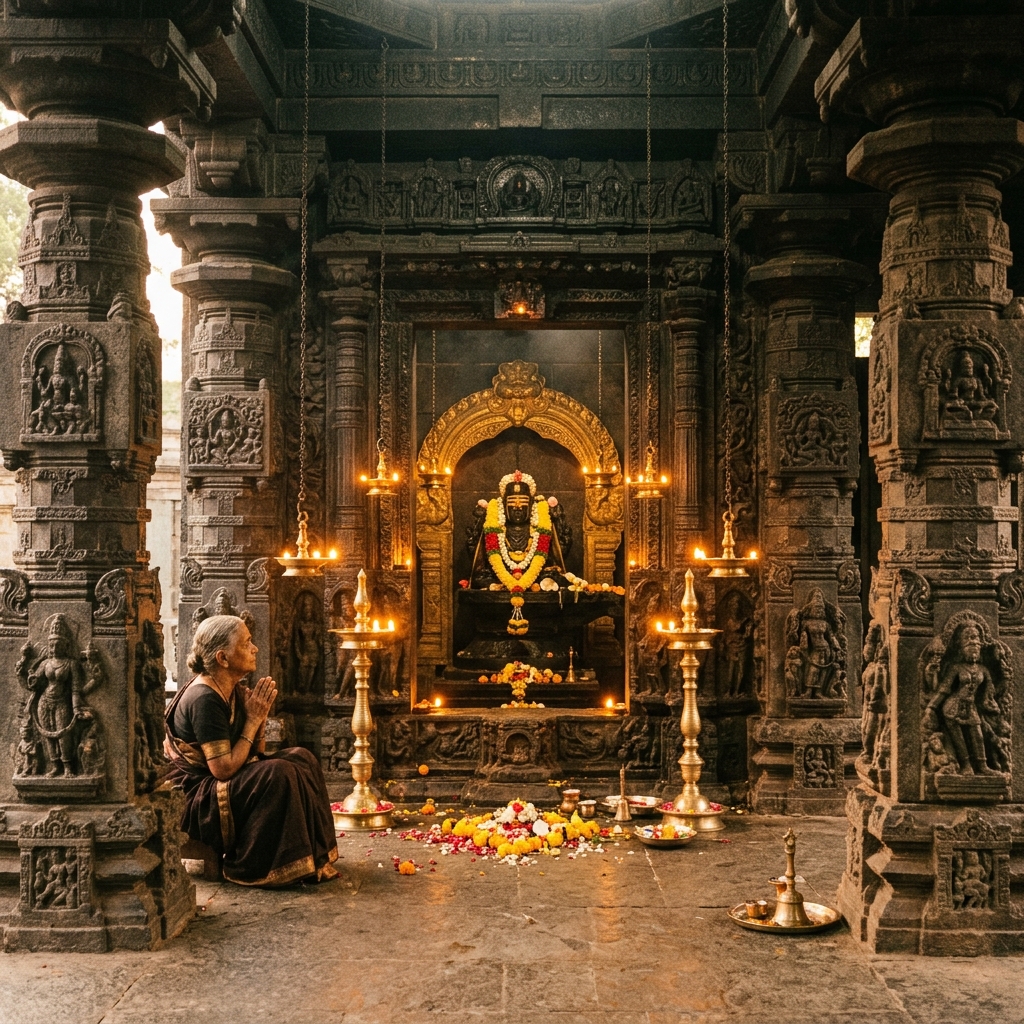
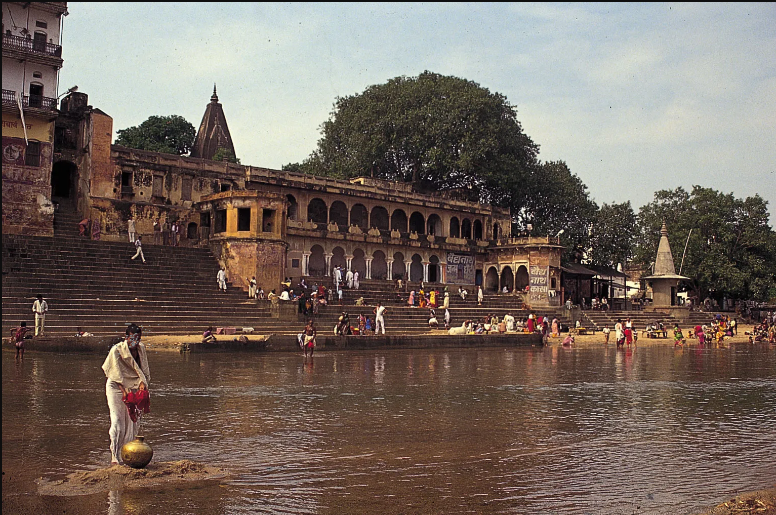
In the sacred geography of Hindu pilgrimage sites, the Vishnupad Temple in Gaya, Bihar, stands as one of the most spiritually significant landmarks. Located on the scenic banks of the subterranean Falgu River, this ancient temple is the heart of all ancestor salvation rites (Shradh, Tarpan, and Pind Daan).
The temple is unique because it does not house a traditional idol as its primary deity. Instead, inside the sanctum sanctorum, it enshrines a 40-centimeter footprint of Lord Vishnu stamped in solid basalt stone, known as the Vishnu Pada. Places of worship dedicated to divine footprints are rare in Hinduism, and this particular footprint is considered the ultimate gateway to the heavenly realms.
For families traveling to Gaya to honor their ancestors, understanding the history, layout, and step-by-step ritual guidelines of the Vishnupad Temple is essential to ensure an authentic and undisrupted spiritual experience.
The Sacred Legend of Demon Gayasur
The origin of the Vishnupad Temple is described in detail in the Vayu Purana.
In ancient times, there lived a powerful demon (Asura) named Gayasur. Unlike other demons who caused destruction, Gayasur was highly righteous and performed intense penance to Lord Vishnu. Impressed by his devotion, Lord Vishnu granted him a unique boon: Gayasur's body would become the most sacred spot on earth. Anyone who touched his body or performed religious rites upon it would be immediately purified of all sins and granted direct entry into Vaikuntha (Lord Vishnu's celestial abode).
As a result, sinners from all over the world began touching Gayasur's body, instantly achieving salvation without experiencing the natural cycle of karma. To regulate this overflow of souls and stabilize the purification energy, the gods decided to pin Gayasur deep into the earth.
Lord Vishnu stepped onto Gayasur's chest, pressing him down. Gayasur submitted willingly, but asked for a final boon: that his body remain a permanent vortex of salvation, and that anyone who performs Shradh and Pind Daan at this spot secures immediate Moksha for their ancestors. Lord Vishnu agreed, leaving his footprint permanently stamped on the basalt stone where he stood. The Vishnupad Temple is built around this exact footprint.
Architectural Layout and Sanctum Sanctum
The present structure of the Vishnupad Temple was built in 1787 by Maharani Ahilyabai Holkar, the noble queen of Indore, who was renowned for rebuilding destroyed Hindu temples across India.
* The Structure: The temple is constructed of massive grey granite blocks held together with iron clamps. It features a majestic octagonal shrine (Shikhara) rising 100 feet high, decorated with delicate stone carvings.
* The Assembly Hall (Sabha Mandap): A large, pillared hall precedes the inner sanctum. The pillars are made of solid stone and support a dome-like ceiling. Here, hundreds of devotees sit under the guidance of local Gayawal Pandas to prepare the offering pindas.
* The Footprint Shrine: The footprint itself is located in the center of the inner sanctum. It is enclosed within a silver-plated octagonal basin. Devotees sit around this basin to make their final offerings.
Historical Heritage and Architectural Legacy
Beyond its spiritual dimensions, the temple is a masterpiece of late medieval Indian architecture. The grand structure built by Queen Ahilyabai Holkar in 1787 replaced older stone platforms that had weathered centuries of regional shifts.
The basalt stone chosen for the footprint sanctum was sourced from the quarries of Patharkati (located about 30 km from Gaya). Basalt is one of the hardest stones available, chosen specifically so that the continuous washing with milk, honey, and water, combined with the placing of thousands of pindas daily, would not erode the footprint carvings over centuries.
The temple complex also houses a sacred banyan tree and several sub-shrines dedicated to Lord Shiva, Goddess Durga, and Lord Ganesha. The courtyard features detailed epigraphs in Sanskrit, detailing the grants and contributions made by various Maratha and local rulers to support the temple's maintenance. The Gayawal Pandas maintain their ancient registry archives (Bahi Khatas) in the administrative buildings around the temple courtyard, forming a living museum of Hindu family lineages.
Step-by-Step Pind Arpan Procedure
Performing Pind Daan at the Vishnupad Temple is a structured Vedic process. Below is the step-by-step guide to conducting the ritual correctly:
### Step 1: Preparation and Snan
The ritual begins early in the morning. Devotees first take a sacred purificatory bath (Snan) in the Falgu River. After the bath, you must change into clean, traditional clothing (dhoti-kurta for men, simple traditional attire for women).
### Step 2: Preparing the Pindas
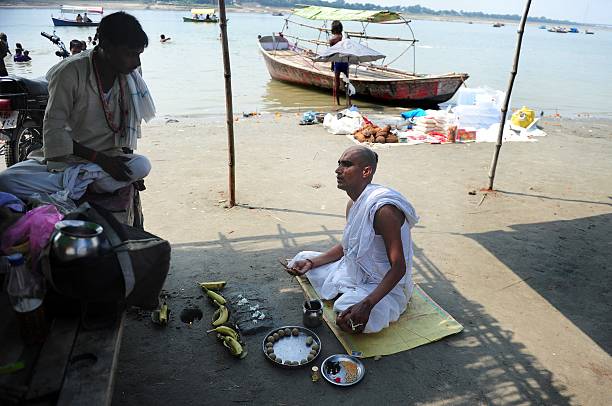
In the assembly hall of the temple, under the guidance of your assigned Gayawal Panda, you will sit to prepare the Pindas.
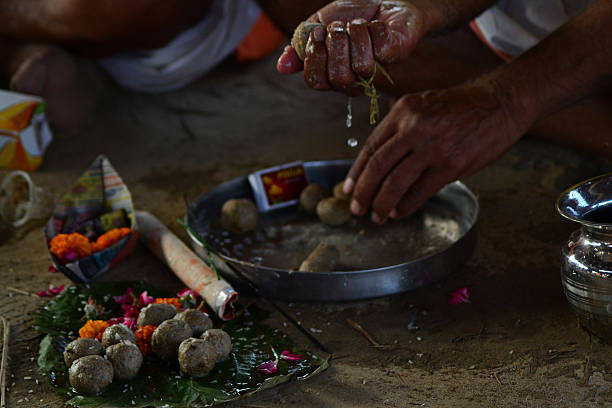
These are spherical balls made of cooked rice, barley flour (Jau*), milk, honey, ghee, and black sesame seeds.
* The Pandits guide you to form these balls while chanting lineage gotras, transferring the physical essence of your devotion into the offerings.
### Step 3: Chanting the Lineage Sankalp
Once the pindas are ready, the priest leads you in the Sankalp (solemn vow). You will hold water, flowers, and sesame seeds in your right hand, reciting your family lineage:
* Names of three generations of paternal ancestors (father, grandfather, great-grandfather).
* Names of three generations of maternal ancestors (mother, grandmother, great-grandmother).
* Gotras of both families.
### Step 4: Placing the Pindas on the Footprint
You will carry the prepared pindas inside the inner sanctum. Under the priest's direction, you will place the pindas directly onto the silver basin surrounding Lord Vishnu's footprint.
* As you place each pinda, you recite prayers asking Lord Vishnu to receive the souls of your ancestors and carry them directly to Vaikuntha.
The touch of the basalt footprint is believed to instantly dissolve any pending karmas (Karma Bandhana*) of the ancestors.
### Step 5: Concluding Brahmin Bhojan
After the footprint arpan, you will offer Dakshina (monetary charity) and food items to the Gayawal Pandas and Vedic Brahmins to seal the blessings of the ancestors. In the Vedic framework, the physical intake of food by a satvik Brahmin is equivalent to feeding the ancestors directly. Therefore, ensuring the priests are satisfied with both the meal and the dakshina is key to completing the footprint ritual.
### Step 6: Completing the Akshay Vat Pradakshina
While the footprint represents the main offering spot, the ritual is completed by walking to the nearby Akshay Vat (immortal Banyan tree) to tie a sacred thread (Mauli) and request the final blessing of permanent peace and family longevity. This ensures the ancestors' souls do not return to loop in earthly desires. You can ask your priest coordinator for the exact path to this concluding spot.
Temple Rules and Code of Conduct
To maintain the sanctity of the temple, all visitors must adhere to the following rules:
1. Dress Code: Traditional attire is mandatory. Men should wear clean dhotis or simple kurtas (avoid wearing leather belts, wallets, or shoes inside the main area). Women should wear traditional sarees or salwar suits.
2. Barefoot Walk: The entire temple complex is a barefoot zone. During summers, the stone floor gets very hot, so the temple management lays down damp jute carpets for devotees to walk on.
3. Photography Restriction: Photography and videography are strictly prohibited inside the inner sanctum. You can take photos of the outer temple architecture, but keep your mobile phones inside your bags when entering the footprint shrine.
4. Avoid Touts: Ignore unauthorized guides inside the complex who promise "fast-track" or "private footprint touch" for cash. Only deal with your pre-booked Gayawal Panda.
Temple Timings and Visitor Guide
Planning your visit to Vishnupad Temple requires knowing the exact schedule to avoid crowds and ensure you get a peaceful ritual slot.
### Daily Temple Timings
| Session | Time | Activity |
|||-|
| Morning Opening | 6:00 AM | Temple gates open; mangal aarti performed |
| Morning Ritual Slot | 6:00 AM – 12:00 PM | Best time for Pind Daan — cooler, less crowded |
| Afternoon Break | 12:00 PM – 2:00 PM | Inner sanctum partially restricted in summer |
| Afternoon Ritual Slot | 2:00 PM – 6:00 PM | Moderate crowd; suitable for offering pindas |
| Evening Aarti | 6:00 PM – 7:00 PM | Grand Aarti ceremony — must-see for pilgrims |
| Temple Closes | 9:00 PM | All visitors must exit by 9 PM |
> Best Ritual Slot: 6:00 AM – 9:00 AM. You avoid peak summer heat, get the shortest queues, and receive the most focused attention from Gayawal Pandas who start fresh in the morning.
### Crowd Forecast by Season
| Period | Crowd Level | Recommended? |
|--|-|-|
| Pitru Paksha (Sep–Oct) | 🔴 Extremely High (10–15 lakh visitors) | ✅ Most Auspicious |
| Amavasya days (monthly) | 🟠 High | ✅ Very Auspicious |
| Winter months (Nov–Feb) | 🟡 Moderate | ✅ Best Weather |
| Summer (Apr–Jun) | 🟢 Low | ⚠️ Very Hot |
| Monsoon (Jul–Aug) | 🟡 Moderate | ✅ Falgu fills with water |
### What to Carry for the Visit
- White traditional clothing (dhoti/kurta for men, plain saree for women)
- Ancestor details — names, Gotra, approximate year of death
- Small amount of cash for dakshina, tipping, and minor local expenses
- Water bottle — especially important in summer months
- Light footwear easy to remove — the entire compound is barefoot
- Mobile phone with low brightness — out of respect for the sanctum
### Getting to Vishnupad Temple
| Mode | Details |
|||
| From Gaya Railway Station | 4 km, ~15 min by auto-rickshaw (₹50–80) |
| From Gaya Airport | 11 km, ~25 min by cab (₹200–300) |
| From Bodhgaya | 13 km, ~30 min by cab (₹250–350) |
| Parking | Available 500m from the temple; no vehicles allowed in the inner lanes |
Frequently Asked Questions
Q.Can women perform the footprint offering at Vishnupad Temple?
Q.How long does the ritual take inside the temple?
Q.Is the temple open throughout the year?
Conclusion and Booking Assistance
Visiting the Vishnupad Temple is a profound spiritual experience. By placing the sacred Pindas on Lord Vishnu's footprint, you perform the ultimate act of gratitude and duty towards your lineage.
Need a verified Gayawal Panda and complete coordination for your ritual at Vishnupad Temple?
Our local team of coordinators manages everything — including VIP entry, gotra checks, clean lodging, and puja materials — ensuring a smooth and respectful pilgrimage.
Book Your Vishnupad Ritual | Speak to a Temple Coordinator | Read the Full Pind Daan Guide
Speak With Coordinator
Receive gotra-specific advice and customized pricing guidelines for Gaya rituals.
Related Articles
Gaya Rituals Promise
- ✓100% scriptural guidance under Vedic Acharyas.
- ✓Complete price transparency with zero hidden dakshina.
- ✓Respectful support for elderly & NRI families.