
Authentic Pind Daan in Gaya - Complete Ritual Packages
Performing Pind Daan in Gaya is a sacred duty to ensure the liberation and peace (Moksha) of your ancestors. Our team provides completely transparent, authentic, and step-by-step guidance for families visiting Gaya Ji.
Why Choose Us for Pind Daan in Gaya?
We handle all logistical and spiritual requirements so your family can focus purely on the rituals. Whether you are visiting during Pitru Paksha or any auspicious tithi throughout the year, we customize the package to fit your traditions.
Our Gaya Pind Daan Services Include:
Vedic Pandits
Experienced Teerth Purohits to perform your rituals with complete Vedic accuracy.
Samagri Arrangement
All necessary puja items (barley flour, sesame seeds, honey, etc.) are provided.
Holy Site Coordination
Complete setup and smooth execution at the Phalgu River, Vishnupad Temple, and Akshay Vat.
What is Pind Daan?
In Hindu dharma, Pind Daan represents the most critical duty a descendant owes to their departed forefathers. The word 'Pinda' literally translates to a round, spherical mass of cooked rice or barley flour mixed with black sesame seeds, honey, and milk. This ball represents the physical shell of the soul. 'Daan' translates to charity, offering, or donation.
According to the Garuda Purana, when a person passes away, the soul departs the physical body and transitions into the state of a 'Preta' (a wandering energy body). In this intermediate state, the soul feels intense spiritual hunger and thirst, yet lacks physical organs to satisfy them. By offering the Pinda under strict Vedic mantras, descendants satisfy this hunger, helping the soul shed its earth-bound desires and travel forward to the ancestral dimension known as Pitru Loka.
Skipping these vital rites can trap ancestral spirits in a state of limbo, which Vedic literature describes as the origin of Pitru Dosha. This cosmic imbalance often manifests in the descendants' lives as career failures, childlessness, financial blockages, or persistent domestic disharmony. Performing Pind Daan resolves these blocks and ensures the continuous flow of ancestral blessings. To proceed with the rituals under the guidance of authorized priests, you can Book Pind Daan Service today.
The Philosophy of Pitru Rina
Every individual is born with three fundamental debts: Deva Rina (debt to gods), Rishi Rina (debt to sages), and Pitru Rina (debt to ancestors). While prayers satisfy the gods and learning satisfies the sages, only the ritual of Shradh and Pind Daan can repay the debt to ancestors who passed on the gift of life.
— Vayu Purana
The Legend of Demon Gayasur
In ancient times, a demon named Gayasur performed intense penance. Pleased, Lord Vishnu granted him a unique boon: his body would become the most sacred spot on earth. Anyone who touched his body or performed rituals upon it would be purified of all sins and achieve immediate entry into Vaikuntha.
To stabilize this powerful purification force, Lord Vishnu placed his foot upon Gayasur's chest, pressing him deep into the earth. The spot where Lord Vishnu stood is the heart of Gaya today, housing the Vishnupad footprint.
Why is Gaya Important for Ancestor Rites?
Gaya is designated as the most sacred place on Earth for performing post-death rites (Shraddh and Pind Daan). The scriptures describe Gaya as the body of the demon Gayasur, who was purified by Lord Vishnu and granted a boon: anyone who performs ancestral rites here will achieve immediate salvation for their forefathers.
The Garuda Purana states: "By offering even a single pinda in Gaya, one's ancestors are immediately freed from hellish realms and travel to the divine realm of Pitru Loka." The Vayu Purana devotes several chapters explaining that any food or water offered to ancestors in Gaya becomes inexhaustible, bringing permanent satisfaction to their souls.
This holy land acts as a spiritual vortex. Rituals performed here bypass the standard long-term karmic cycles, allowing even those souls who died unnatural or painful deaths to find immediate peace. Devotees from all over the world travel to Gaya Ji to release their lineages from ancestral suffering. For a detailed overview of the steps involved, please Read Pind Daan Guide.
Importance of Vishnupad Temple
The Vishnupad Temple is the focal spiritual landmark of Gaya. Located on the banks of the Falgu River, it houses a 40-centimeter footprint of Lord Vishnu stamped in solid basalt stone, known as the Vishnu Pada.
This footprint represents the exact point where Lord Vishnu pinned the demon Gayasur under the earth. Scripturally, placing the Pindas directly upon this footprint ensures that the ancestors' souls are directly received by Lord Vishnu, carrying them to the highest heavens.
Devotees sit around the footprint sanctuary under the guidance of local Gayawal Pandits, chanting the lineage Sankalps. The powerful basalt stone retains the spiritual vibrations of centuries of chants, creating an intense atmosphere of peace and devotion.
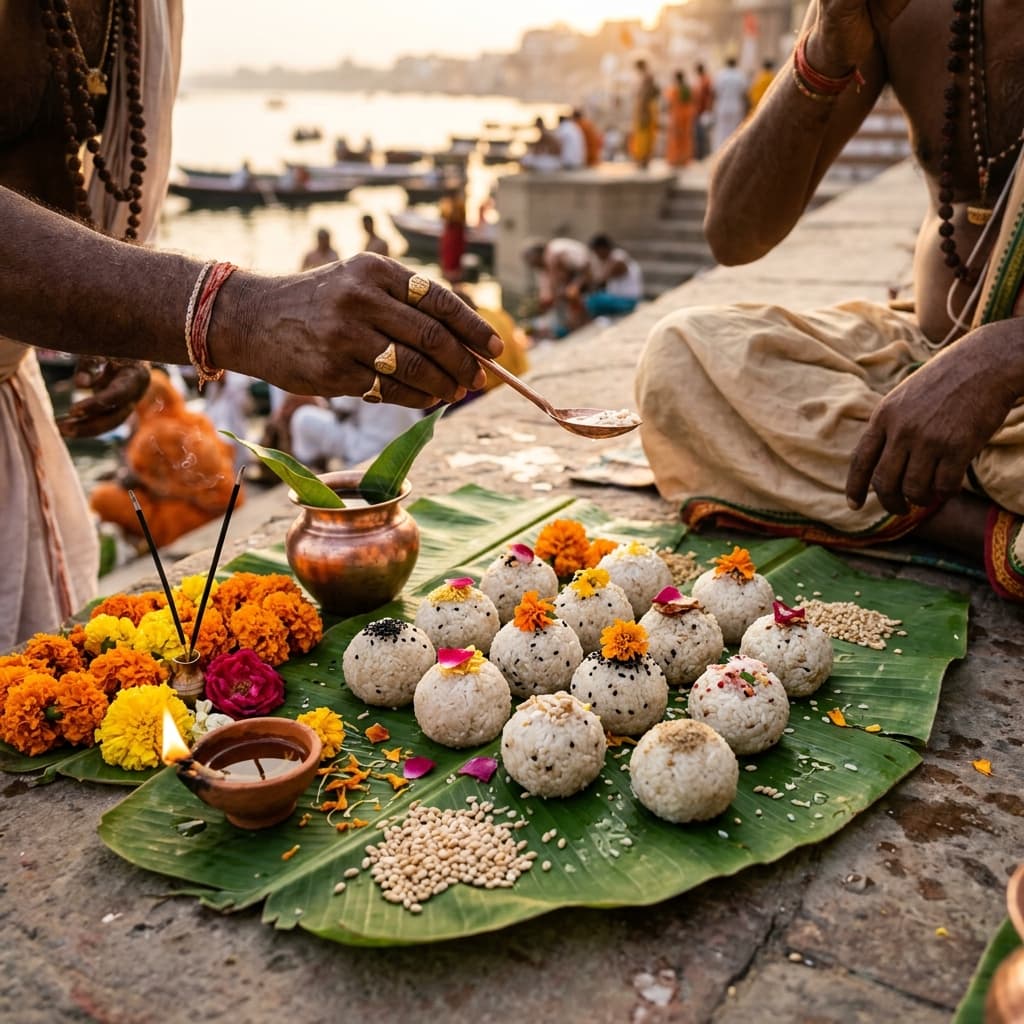 Pind Daan Ritual at Vishnupad Temple Gaya
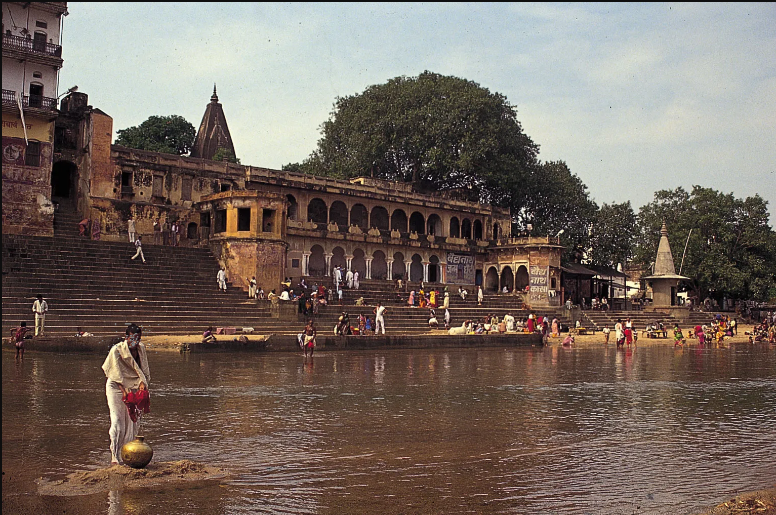 Holy Banks of Falgu River
Importance of Falgu River
The Falgu River holds a unique status among India's holy rivers. Due to a mythological curse by Sita Devi, the river flows underground, beneath its sandy bed. The water is present just inches beneath the dry sand, giving it the name Antah Salila (subterranean river).
According to the Ramayana, when Lord Rama and Lakshmana went to collect puja materials, King Dasharatha's soul appeared before Sita Devi, demanding food. Sita Devi offered pindas made of sand from the Falgu banks, witnessed by the river, a cow, a tulsi plant, and a fire. When the river falsely denied this to Lord Rama, Sita Devi cursed it to flow underground.
Because of Sita Devi's blessing, the sand of the Falgu River is considered extremely sacred. Devotees dig small pits in the sand to extract water for Tarpan. Offering sand and water here symbolizes purification, helping release ancestors from negative earthly attachments.
Detailed Pind Daan Procedure
Snan & Purificatory Rites
The ritual begins with a sacred bath (Snan) in the Falgu River or using holy water. Devotees dress in clean, traditional white attire (Dhoti or Kurta for men, simple traditional clothes for women) to maintain physical and spiritual purity during the rites.
Lineage Sankalp
Guided by our verified Gayawal Pandit, you perform the Sankalp. This involves chanting Sanskrit mantras declaring your identity, Gotra (lineage), relationship to the deceased, and names of three generations of ancestors (Paternal & Maternal) to dedicate the ritual's energy specifically to them.
Falgu River Tarpan
Water mixed with black sesame seeds (Til), barley flour (Jau), kush grass, and flowers is offered repeatedly through the hands into the river. This satisfies the spiritual thirst of the ancestors and frees them from cravings in the subtle dimensions.
Vishnupad Pinda Arpan
Spherical pindas made of cooked rice, barley, milk, ghee, and honey are formed. These pindas are placed directly on the basalt stone footprint of Lord Vishnu inside the temple sanctuary, representing the transfer of ancestral souls to the direct protection of Lord Vishnu.
Akshay Vat Concluding Blessing
Devotees proceed to the immortal Banyan tree (Akshay Vat) where the final pinda is offered. The ceremony concludes with the tying of a sacred yellow/red thread (Mauli) to the tree, asking ancestors for their permanent blessings of peace, health, and family longevity.
Brahmin Bhojan & Charity
Feeding Vedic Brahmins (Brahmin Bhoj) and offering Dakshina (charitable gifts, grain, and clothes) is the concluding Vedic requirement. The satisfaction of the Brahmins represents the direct satisfaction of the ancestors, sealing the complete process.
Required Information & Details
To perform an authentic Vedic Pind Daan, the priest requires specific details of your ancestry. These are considered the actual 'Vedic documents' necessary to anchor the Sankalp mantras correctly.
If you do not have all the details, our Pandits can help you identify your lineage records using historical records (Bahi Khata) maintained by Gayawal Pandas. If performing Narayan Bali or Tripindi Shraddha, any detail about the cause of death is also useful. If you have any queries about the required information, feel free to Contact Us for direct assistance.
Lineage Details Checklist
- Names of the departed ancestors (up to three generations).
- Gotra (family lineage name) of both paternal and maternal sides.
- Date of passing (Tithi / Lunar day) if known.
- Identification document (Aadhaar Card, Passport) for hotel check-ins.
Auspicious Vedic Windows
The premium 15-day period in September-October dedicated exclusively to ancestral veneration.
Occurs monthly. Considered the standard day to satisfy ancestors when specific dates are unknown.
Powerful cosmic alignment days where spiritual offerings yield multiple times the benefit.
Best Time & Pitru Paksha Significance
While Pind Daan in Gaya can be performed throughout the year, the 15-day period of Pitru Paksha (occurring during the Bhadrapada/Ashwin month, usually in September-October) holds unmatched cosmic importance.
Vedic cosmology states that during Pitru Paksha, the Sun enters the zodiac sign of Virgo (Kanya). At this alignment, the barrier between the earthly plane and the Pitru Loka dissolves. Ancestral souls descend to earth to receive offerings directly from their descendants.
Performing Pind Daan on the specific Tithi (anniversary day) of your ancestor's passing during Pitru Paksha brings immense peace to their souls. If you do not know the exact date, the final day of the fortnight, known as Sarvapitri Amavasya, is dedicated to performing rites for all ancestors collectively.
Why Choose Gaya Rituals?
We provide professional coordination, matching your family to genuine, experienced Pandas while ensuring a clean and hassle-free travel experience.
Lineage Pandits
Direct access to genuine Gayawal Pandas holding ancient lineage document archives (Bahi Khatas) for Gotra checking.
Transparent Pricing
No hidden priest charges, forced donations, or complex temple negotiations. All costs are declared beforehand.
End-to-End Travel
Complete logistics support including premium temple hotel bookings, private cabs, and airport/railway transfers.
Frequently Asked Questions
The primary pooja performed in Gaya is Pind Daan (also known as Gaya Shradh). This sacred ancestral ritual is performed to offer peace and salvation (Moksha) to the departed souls of ancestors.
Coordinate Your Pind Daan with Vedic Accuracy
Let us assist you with temple permits, clean accommodation, local cabs, certified Pandits, and authentic puja items. Reach out to speak directly with our team.