

Overview
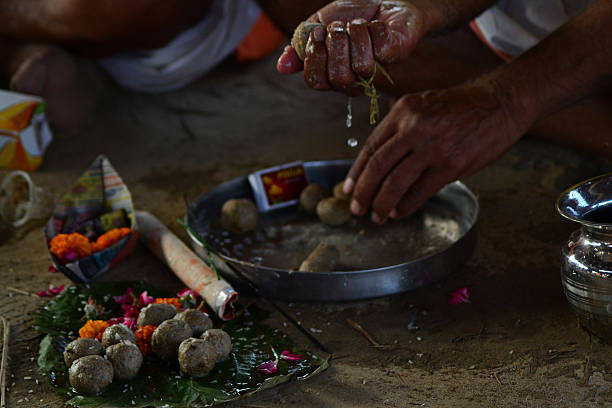
While solid food offerings (Pindas) are central to ancestral worship, Tarpan—the sacred offering of water mixed with sesame seeds, barley, and flowers—is equally vital. The word Tarpan comes from the Sanskrit root Trup, which means to satisfy, please, or quench. In Vedic tradition, Tarpan is a daily or periodic ritual performed to nourish, satisfy, and liberate the subtle bodies of deceased ancestors who exist in the spiritual realms.
Importance
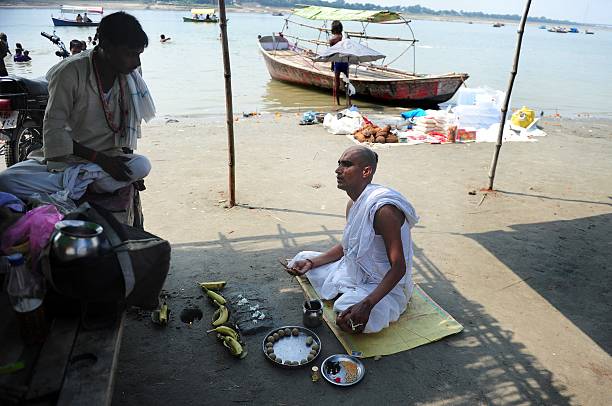
Water is the ultimate symbol of life, purification, and consciousness. When water is infused with black sesame seeds (Kala Til) and Kusha grass, it gains spiritual frequency. Chanting lineage gotras while pouring this water acts as a psychic bridge. Hindu scriptures state that ancestors, lacking physical bodies, experience intense spiritual hunger and thirst. Tarpan satisfies this thirst directly. Performing it on the banks of holy rivers like the Falgu River in Gaya is considered highly meritorious.
Benefits
Lineage Protection: Satisfied ancestors protect the family from negative spiritual influences, accident traps, and household distress.
Progeny Blessings: Resolves deep ancestral blockages that cause childlessness, delay in marriage, or chronic family disputes.
Karmic Cleanse: Relieves the performer of minor daily sins and balances personal karmic debts inherited from ancestors.
Mental Peace: Induces emotional calm, clarity, and stability for family members by smoothing out ancestral vibrations.
Procedure
Preparation: Perform in the morning. Use a copper or brass vessel filled with fresh water. Add black sesame seeds, barley, and white flowers.
Kusha Grass: Wear a ring made of Kusha grass (Pavitri) on the ring finger of the right hand.
Mantra & Vow: Take the Sankalp, reciting your name, gotra, and names of paternal/maternal ancestors.
Pouring: Face South. Pour the water slowly over the right thumb (the side of the hand associated with ancestors, known as Pitru Teertha) while chanting: "tasmai swadha namaha, tasmai swadha namaha."
Best Time
* Pitru Paksha: The most powerful 16-day window of the year.
* Amavasya: Perform monthly on every new moon day.
* Sankranti: Transition days when the Sun moves between zodiac signs.
* Shraddh Tithi: The exact lunar date on which a parent passed away.
Frequently Asked Questions
Q.What is the difference between Pind Daan and Tarpan?
Q.Can anyone perform Tarpan?
Q.Why are black sesame seeds used in Tarpan?
Q.Do I need a Pandit to perform Tarpan?
Q.What should I wear during the ritual?
Call To Action
Need assistance with Tarpan in Gaya? Speak with our coordinator today.
Let our verified local Gayawal coordinators and pandits help you fulfill your sacred ancestral duties with absolute scriptural discipline and comfort.
Speak With Coordinator
Receive gotra-specific advice and customized pricing guidelines for Gaya rituals.
Related Articles

Gaya Rituals Promise
- ✓100% scriptural guidance under Vedic Acharyas.
- ✓Complete price transparency with zero hidden dakshina.
- ✓Respectful support for elderly & NRI families.