
Falgu River Pind Daan: Significance, Ramayana Story & Ritual Procedure
Understand why the Falgu River in Gaya is the first and most essential sacred site for Pind Daan. From the Ramayana legend of Lord Rama and Sita to the step-by-step Tarpan procedure — the complete guide.
Introduction: The River That Flows Underground
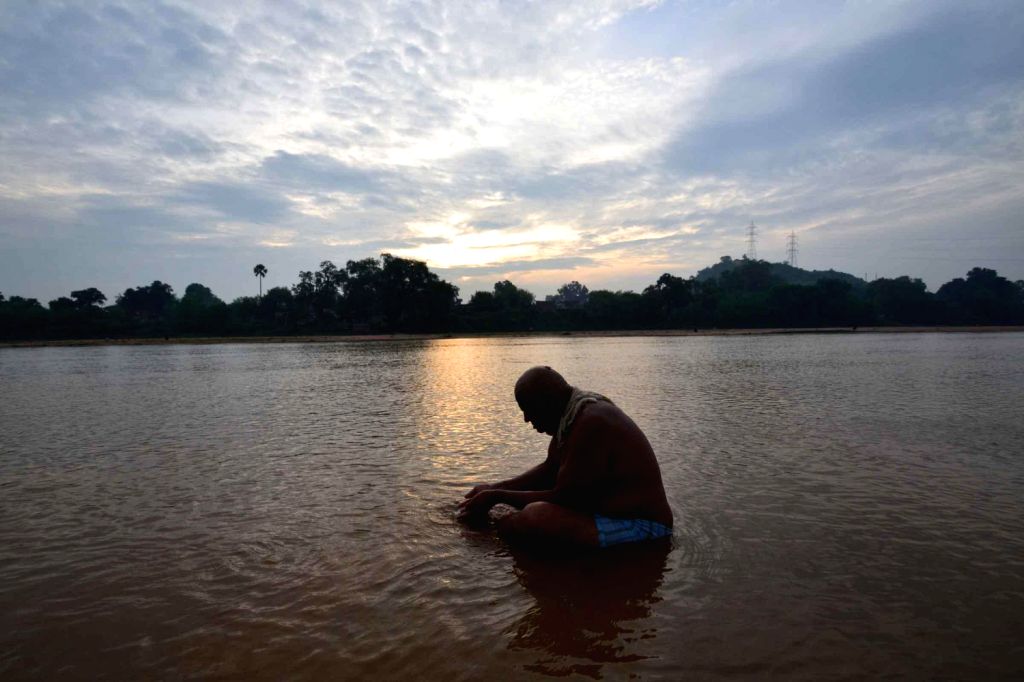
If you visit Gaya for the first time, one of the most striking sights is the Falgu River — or rather, the apparent absence of it. For most of the year, where you expect to see a flowing river, you instead find a wide expanse of pale golden sand. Pilgrims walk across this sandbed, dig small pits with their hands, and perform water offerings into the sand itself.
This is not unusual for Gaya. It is the sacred reality of the Falgu River — a river so spiritually charged that it is believed to flow underground, hidden from ordinary sight, yet fully present to receive the prayers and offerings of devoted descendants.
For millions of Hindu families performing Pind Daan in Gaya, the Falgu River is the first and most foundational sacred location. The ritual invariably begins here — with a purificatory bath, followed by water libations (Tarpan), and the first offering of Pindas on the riverbank. Understanding why this river holds such extraordinary importance requires going back to one of the most moving stories in the Ramayana.
The Ramayana Connection: When Sita Performed Pind Daan
The relationship between the Falgu River and Hindu ancestral rites is inseparably tied to a specific episode from the Ramayana — an episode that not only explains the river's spiritual power but also sets a profound precedent for the tradition of Pind Daan itself.
### The Death of King Dasharatha
After King Dasharatha — father of Lord Rama — passed away, his soul required the performance of proper ancestral rites to find peace and proceed toward liberation. According to Vedic law, these rites had to be performed at the most sacred location available. Rama, Sita, and Lakshmana were in exile at the time, but they journeyed to Gaya specifically to honor Dasharatha.
### The Gathering of Materials
Upon arriving in Gaya, Lord Rama and Lakshmana went to the nearby villages to gather the proper ritual materials — cooked rice, sesame seeds, Kush grass, and offerings for the fire ceremony. They instructed Sita to wait at the banks of the Falgu River and begin the initial prayers.
### Sita Receives a Direct Sign
What happened next changed the spiritual history of Gaya forever.
While Rama and Lakshmana were away gathering materials, King Dasharatha's soul appeared before Sita — manifesting near the Falgu River, hungry and eager to receive the ancestral offerings.
Sita was in a dilemma. The ritual required the men of the family to perform the Pind Daan, and she had none of the prepared materials. Yet her father-in-law's soul stood before her in spiritual need.
Acting from the purest instinct of devotion, Sita gathered river sand with her bare hands, shaped it into Pinda balls, and offered them directly to Dasharatha's soul while calling upon the Falgu River, the Akshay Vat tree, the Ketaki flower, a cow, and a Brahmin present there as witnesses to her offering.
Dasharatha's soul accepted the sand Pindas gratefully, blessed Sita, and departed toward liberation.
### When Rama Returned
When Rama and Lakshmana returned with the materials and performed the formal Pind Daan ceremony, they were surprised to receive no direct sign from Dasharatha's soul — an unusual absence. Rama asked Sita what had happened in his absence.
Sita described the entire event. She called upon the five witnesses — the Falgu River, the Akshay Vat tree, the Ketaki flower, the cow, and the Brahmin — to confirm her account.
### The Falgu River's Curse
Four of the five witnesses — Akshay Vat, the Ketaki flower, the cow, and the Brahmin — confirmed Sita's account truthfully.
The Falgu River, however, denied having witnessed the event, choosing not to speak against Rama (out of a misguided sense of deference, some traditions say, or out of jealousy, others suggest).
Sita was furious. She cursed the Falgu River:
> "Since you denied the truth when I called you as a witness, you shall henceforth flow underground — hidden, invisible, never to be seen by ordinary eyes."
And so the Falgu River disappeared below the surface. To this day, it flows beneath the sand of Gaya — present but invisible — a living reminder of the power of Sita's curse.
### Why This Makes Falgu River Even More Sacred
The Ramayana episode does not diminish the river — it elevates it. The Falgu River was the site of the first Pind Daan performed by Sita. It received the first sand Pindas ever offered. It was blessed by the acceptance of Dasharatha's soul. And its subterranean flow is believed to be a permanent spiritual conduit — more concentrated and powerful than ordinary surface water.
When pilgrims dig into the sand of Falgu and feel water seeping up, they are touching this subterranean sacred stream — the same waters that received Sita's offering and witnessed the liberation of King Dasharatha.
Why Rituals Are Performed at the Falgu River
The Falgu River is not merely the starting point of the Pind Daan ceremony out of geographical convenience. There are specific scriptural and spiritual reasons why the ritual must begin here:
### 1. Purification Before Offering
Vedic ritual law (Dharmaśāstra) requires the Karta (person performing the ritual) to be in a state of complete physical and spiritual purity before making offerings to the ancestors. Bathing in the Falgu River — even in its subterranean form — is considered a powerful purificatory act that removes the daily accumulation of impurities (ashuddhi) and prepares the Karta's body and mind for the sacred ceremony.
### 2. Water as the First Ancestral Medium
In the Vedic cosmology, water (Jal) is the primordial medium of ancestral offerings. The Garuda Purana states clearly that departed souls in the ancestral realm (Pitru Loka) receive spiritual sustenance through water offered by their living descendants. The act of Tarpan — pouring water mixed with black sesame seeds — is the foundational ancestral rite, and it is always performed at a water body. The Falgu River, with its history of receiving Sita's offerings, is considered the most qualified water body on earth for this purpose.
### 3. Connecting to Sita's Precedent
Performing the initial Pind Daan at Falgu River places the devotee in the exact spiritual lineage of Sita's act. The Gayawal Pandas often explain to pilgrims: "Your offering follows in the footsteps of Mata Sita. The same river that received her sand pindas now receives yours." This connection is not symbolic — in the Vedic framework, performing the same ritual in the same location invokes the accumulated spiritual energy of all previous offerings made there across countless generations.
### 4. The Sacred Sand Pindas Tradition
The story of Sita's sand pindas established a unique tradition that continues to this day: sand from the Falgu River bank is itself considered sacred. Some pilgrims — particularly those performing rituals for ancestors who died in unusual or tragic circumstances — include a small amount of Falgu sand in their Pindas as a direct reference to Sita's act of devotion.
The Falgu River Ritual Procedure: Step by Step
The Falgu River ritual is the opening act of the complete Gaya Pind Daan ceremony. Here is the full procedure as guided by Gayawal Pandits:
### Step 1: Morning Arrival at the Ghat
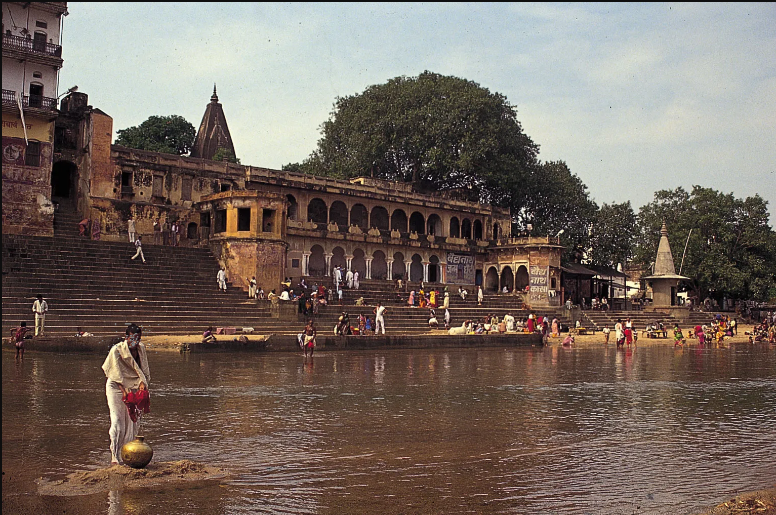
Arrive at the Falgu River ghats between 5:30 AM and 7:00 AM. The early morning light, the cool temperature, and the relative quiet of the ghat make this the ideal time for a focused, undisturbed ritual.
The main ghats where Pind Daan is performed along the Falgu River include:
- Ram Ghat — the most sacred, directly associated with Lord Rama's arrival
- Pret Shila Ghat — for families with ancestors who died in unusual circumstances
- Brahma Kund Ghat — for families with Brahmin lineage or spiritual ancestry
Your Gayawal Panda will guide you to the correct ghat based on your Gotra and family customs.
### Step 2: Snan (Sacred Bath)
The Karta and accompanying family members take a complete purificatory bath at the ghat. You immerse fully three times while chanting:
> "Om Apavitrah Pavitro Va Sarvavastham Gato Pi Va, Yah Smaret Pundarikaksham Sa Bahya Abhyantarah Shuchih"
This mantra invokes Lord Vishnu's purifying presence and is considered the equivalent of bathing in all sacred rivers simultaneously when recited at the Falgu River.
### Step 3: Sankalp (Sacred Vow Declaration)
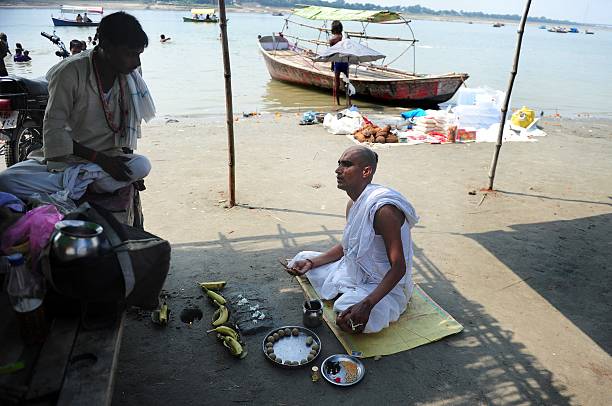
After the bath, you sit with your Gayawal Panda on the riverbank. He leads you through the Sankalp — a formal declaration in Sanskrit identifying:
- Your full name
- Your father's and grandfather's names
- Your Gotra (family lineage)
- The specific ancestors you are performing the ritual for (by name and relationship)
- The purpose of the ritual (ancestral liberation, Pitru Dosha resolution, or annual Shradh)
You hold water, sesame seeds, and Kush grass in your joined palms throughout the Sankalp, releasing them into the sand at the conclusion as a symbolic surrender.
### Step 4: Tarpan (Water Libations)
Tarpan is the core water offering ceremony. Your Panda guides you to:
Fill a copper vessel (Lota) with water from the Falgu River (often water that seeps up from a small dug pit in the sand)
Add black sesame seeds (kala til) — considered the most effective ancestral offering medium
Stand facing south (the direction of Yama, the god of death and ancestral transitions)
Pour the water from the lota through the right hand, calling each ancestor's name aloud:
> "Pitru [Ancestor's Name] — idam tarpayami" (I offer this water to you)
This is repeated for each ancestor being honored — typically 3 generations of paternal ancestors and 3 generations of maternal ancestors. The water seeps into the Falgu sand, believed to reach the ancestors directly through the subterranean sacred river.
### Step 5: Pinda Arpan on the Riverbank
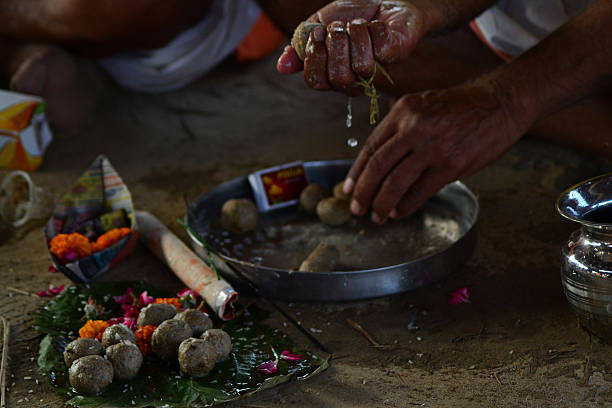
After Tarpan, the first set of Pindas (rice/barley balls) is offered on the Kush grass spread on the riverbank. Your Panda chants the Pinda Arpan mantras as you place each Pinda on the grass:
> "Idam Pindam — [Ancestor's Name and Gotra] — Priti Artham Arpayami"
> (I offer this Pinda for the satisfaction and peace of [Ancestor's Name])
The Pindas are left on the bank at the conclusion of the mantra sequence. Birds (particularly crows, which are considered messengers of the ancestors in Hindu tradition) often arrive to eat the offerings — this is considered an extremely auspicious sign that the ancestors have accepted the food.
### Step 6: Visarjan (Release into the River)
The ceremony at the Falgu River concludes with a symbolic Visarjan — releasing the offering into the river. Since the Falgu flows underground, this is done by pouring the remaining water offerings and flower petals into the sand, which slowly absorbs them downward.
After Visarjan, the family proceeds to the Vishnupad Temple for the next phase of the Pind Daan ceremony.
The Crow (Kaka) — Messenger of the Ancestors at Falgu
One of the most remarkable and moving aspects of the Falgu River ritual is the appearance of crows during the Pinda Arpan. In Hindu ancestral tradition, crows (Kaka) are considered the living vehicles (vahanas) of the ancestors in the earthly realm.
When a crow arrives and eats the Pinda offering during or immediately after the ritual, it is taken as a direct sign that the ancestor has received and accepted the food. Families often weep with emotion at this moment — the sight of a crow calmly eating the Pinda, as if the soul of their departed parent has returned for a final meal.
The Gayawal Pandas say:
> "When the crow eats, your ancestor is satisfied. When the crow eats from your hand, your ancestor blesses you personally."
At the Falgu River ghats, crows are always present — drawn by the continuous stream of Pinda offerings across the years. The presence of crows here is itself considered a sacred sign that the river's spiritual power remains active and alive.
Frequently Asked Questions
### Q: Can I perform Tarpan at the Falgu River even though it appears dry?
A: Yes, absolutely. The Falgu River flows underground. Your Gayawal Panda will guide you to a spot on the ghat where a small pit is dug and water seeps up from below. This subterranean water is used for the Tarpan offering. The Pindas are placed on Kush grass on the sandbank.
### Q: Is there a specific ghat where Sita performed her Pind Daan?
A: The tradition points to the area near Ram Ghat as the approximate site where Sita offered sand pindas for King Dasharatha. It is the most visited and scripturally referenced ghat in Gaya.
### Q: Is the Falgu River ritual mandatory, or can I go directly to Vishnupad Temple?
A: The Falgu River ritual (Snan and Tarpan) is the essential opening act of the Gaya Pind Daan ceremony. It cannot be skipped. The purification bath and water offerings at Falgu prepare the Karta for the footprint offering at Vishnupad Temple. Skipping Falgu and going directly to Vishnupad is considered an incomplete ceremony by Gayawal Pandas.
### Q: What time do the Falgu River ghats get crowded?
A: During Pitru Paksha (Sep–Oct), the ghats are crowded all day from 4 AM to 8 PM. At other times of the year, the busiest period is 7 AM – 11 AM. Arriving before 6:30 AM gives you a peaceful, undisturbed experience.
### Q: Can the Falgu River ritual be performed for Online Pind Daan participants?
A: Yes. In our Online Pind Daan service, our verified Pandits perform the complete Falgu River Tarpan and Pinda Arpan in your name and Gotra while you participate via live HD video call. The water from the Falgu subterranean spring is used, and the offering is made at Ram Ghat.
Conclusion
The Falgu River is not just a geographical starting point for Pind Daan in Gaya. It is the sacred witness to the first ancestral offering ever made in the Vedic tradition — the sand pindas of Sita for King Dasharatha. Its underground flow is a permanent spiritual conduit connecting the living world to the ancestral realm.
When you stand on the sand of the Falgu River, dig into the earth, feel the cool sacred water seep up into your hands, and offer it to the memory of your departed parents and grandparents — you are performing the exact same act that Sita performed thousands of years ago. The river receives it. The ancestors hear it.
Ready to perform Pind Daan at the Falgu River?
Book Your Ritual Now | Talk to a Coordinator | Learn About Vishnupad Temple
Speak With Coordinator
Receive gotra-specific advice and customized pricing guidelines for Gaya rituals.
Related Articles
Gaya Rituals Promise
- ✓100% scriptural guidance under Vedic Acharyas.
- ✓Complete price transparency with zero hidden dakshina.
- ✓Respectful support for elderly & NRI families.